Hybrid Audio Diffusion System (HADS)
Hybrid listening and expanded spatial perception
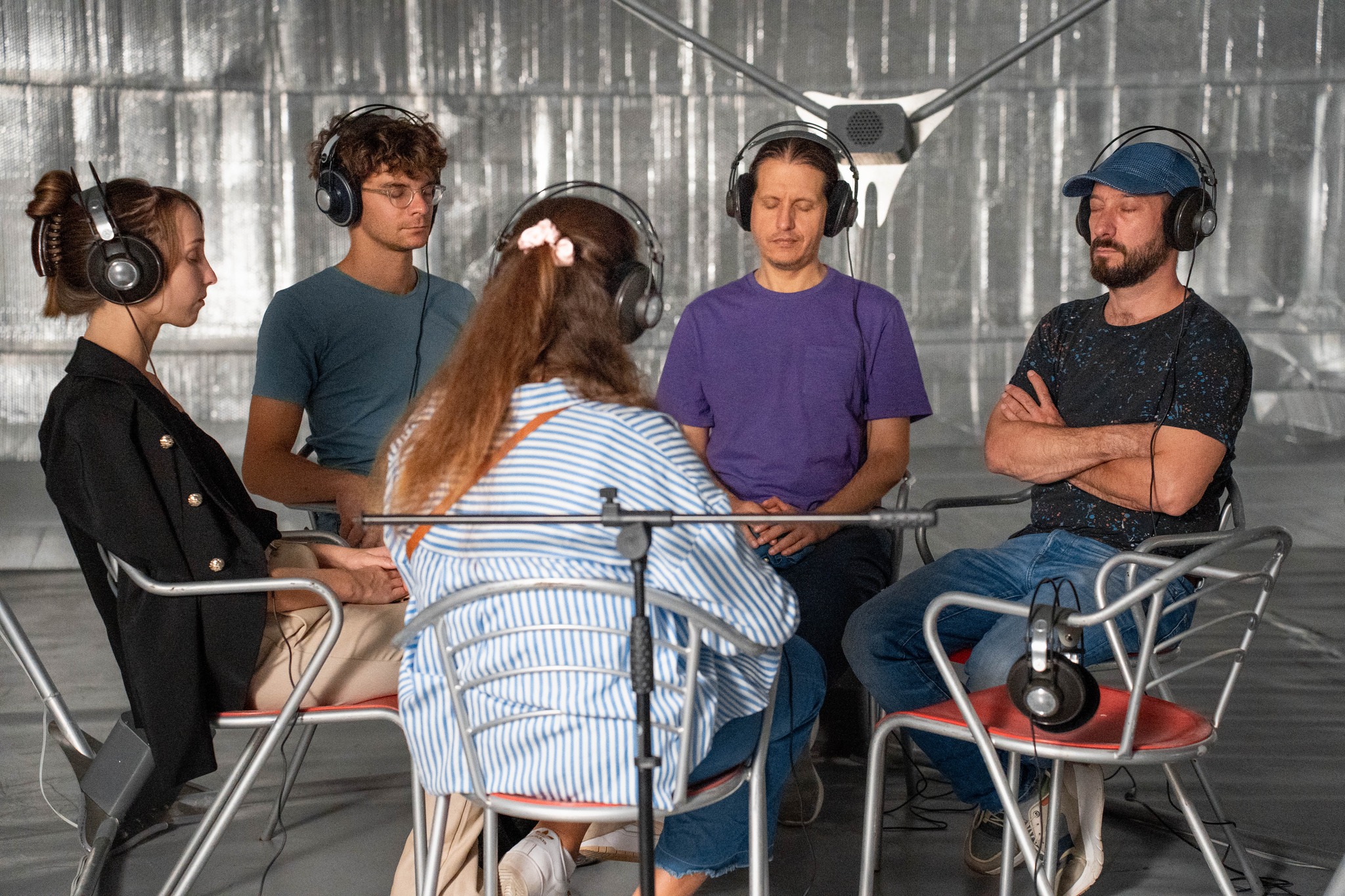
A listening problem
Much spatial music is designed either for loudspeaker arrays or for headphones, each offering a distinct way of shaping space and perception. While both systems enable immersive experiences, they also impose clear limitations: loudspeakers anchor sound to a physical environment, while headphones fix sound to the listener’s head.
The Hybrid Audio Diffusion System (HADS) emerged from a compositional need to work between these conditions, to create listening situations where multiple spatial perspectives can coexist, interact, and contradict one another.
Hybrid Listening
Hybrid listening refers to the simultaneous perception of multiple, interconnected sound fields produced by different listening systems and environments.
In HADS, sound can feel intimately close and infinitely distant at the same time. Some elements remain fixed to the listener’s body, while others unfold in the surrounding space or merge with the natural acoustics of the environment. Listening becomes layered, unstable, and personal, yet shared.
Hybrid listening is defined by tension:
- intimacy ↔ distance
- inside ↔ outside
- body ↔ space
- private ↔ collective
- fiction ↔ reality
Rather than resolving these tensions, HADS composes with them.
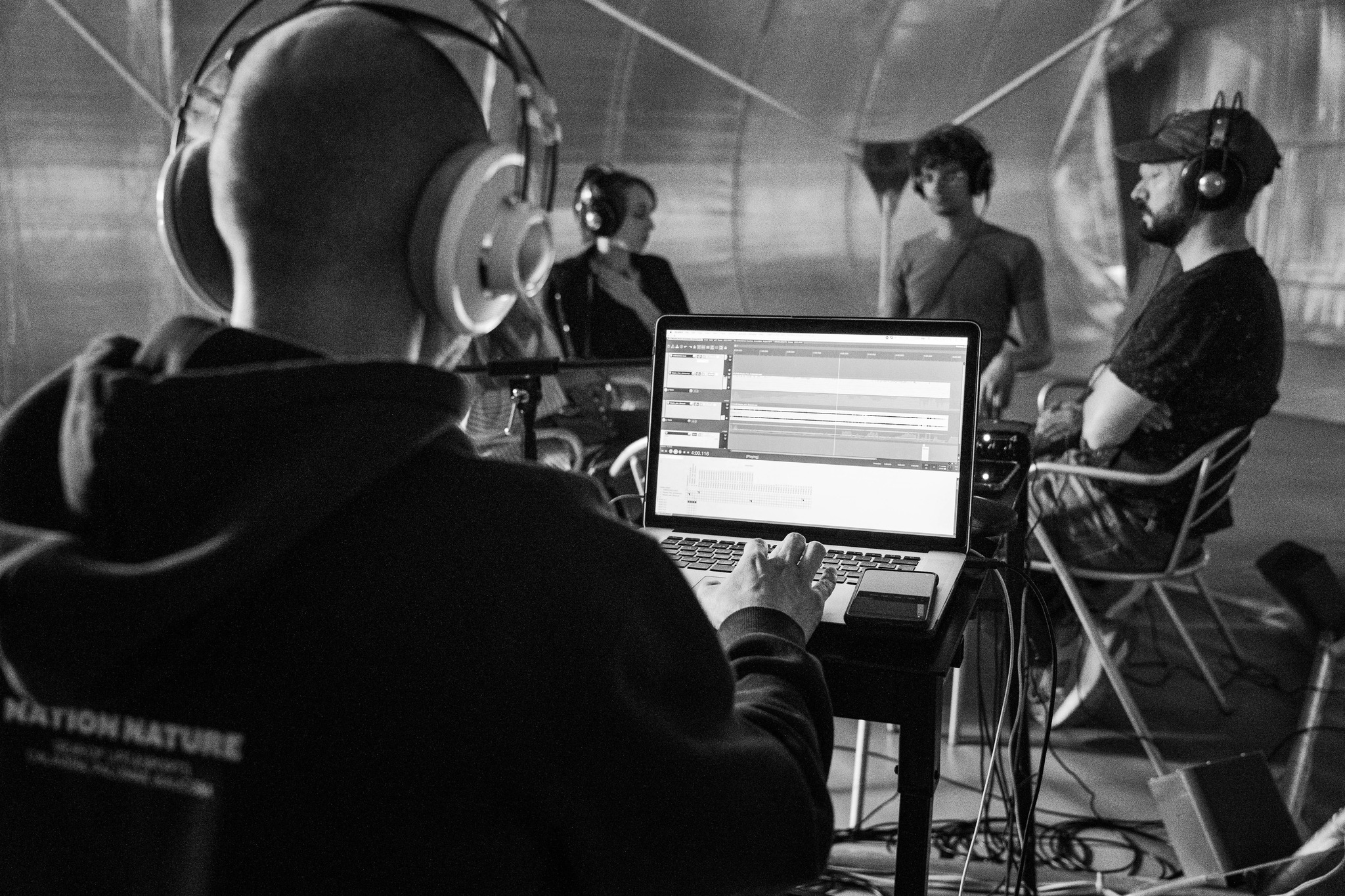
Photo by: Emilija Blauzdyte
The system
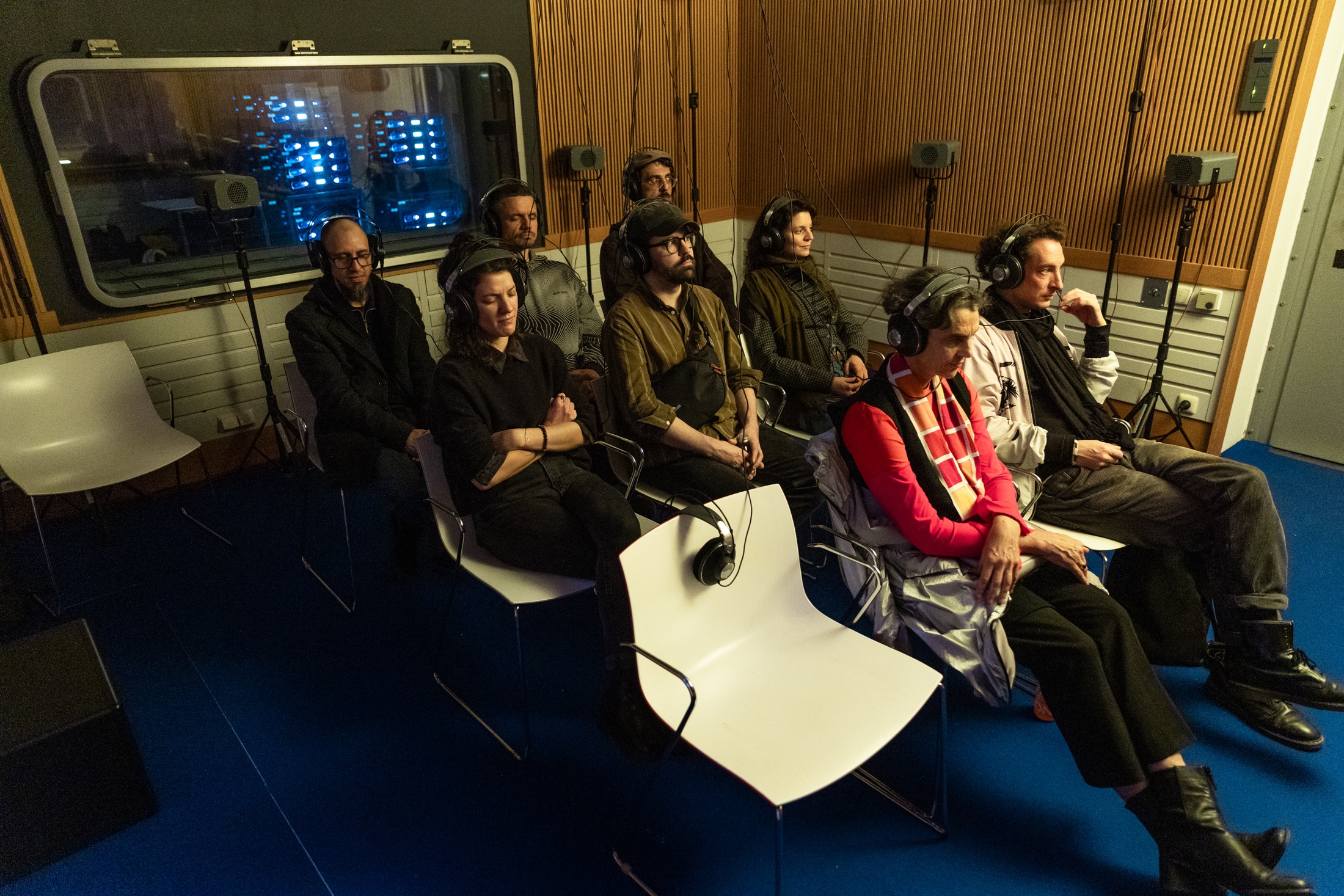
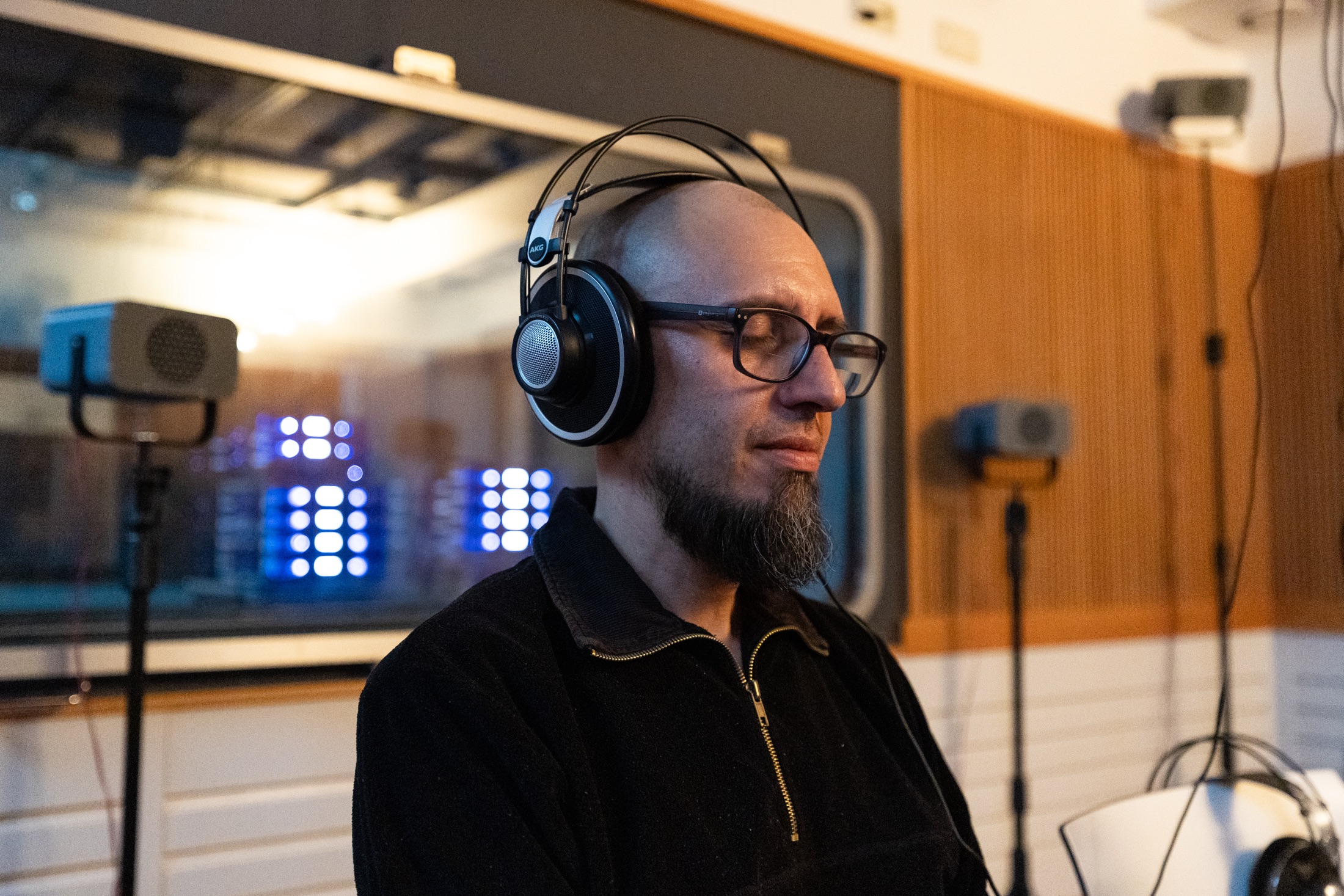
The Hybrid Audio Diffusion System (HADS) is a monitoring system design that combines open headphones with loudspeaker arrays to create augmented three-dimensional immersive sound fields.
By merging headphones and speakers, the system overlays two fundamentally different spatial logics: a sound image that follows the listener’s head and a sound image anchored to the physical environment. These layers form a unified but unstable sound field, where spatial relationships can shift continuously during a performance.
Sound may migrate between systems, invert spatial expectations, or exist simultaneously across multiple perceptual planes.
Frames of reference
HADS operates by combining two spatial frames of reference:
- Egocentric (head-centered): sound moves with the listener
- Allocentric (environment-centered): sound remains fixed in the space
By composing across these frames, it becomes possible to place localized sounds on the headphones while projecting reverberation through the speakers, to invert spatial causality, or to blur conventional distance cues. Each listener experiences the resulting sound field slightly differently, depending on position, movement, and perception.
Blur, fiction, and reality
One of the defining traits of HADS is the blur between fictional and real sound sources. Environmental sounds, live elements, and composed materials can merge into a single auditory stream, making it unclear what belongs to the piece and what belongs to the surrounding world.
This ambiguity enables a diegetic–non-diegetic play: a cough, a footstep, or a distant voice may be perceived as part of the composition, or as something happening in the room. In this space of uncertainty, listening becomes an active, experiential act.
Adaptability and context
HADS is not a fixed or standardised setup. Its minimum requirement is the coexistence of open headphones and a loudspeaker system, even a simple stereo configuration can activate the hybrid principle.
The system adapts to different speaker layouts, indoor and outdoor spaces, and site-specific acoustic conditions. Rather than foregrounding technology, HADS prioritizes the experience of hybrid listening, allowing each context to shape the final form of the sound field.
Selected works created with HADS
- maybe pain (2021) — HADS performance
- no enterramos muertos, sembramos semillas (2023) — HADS performance
- Inner outer self-variance and my deranged disembodied voices (2023) — ensemble / HADS / video
- Dark Infinite Void (2023) — HADS performance
- DEATHSCAPES (2024) — HADS performance
- auraL allure (2025) — HADS performance
